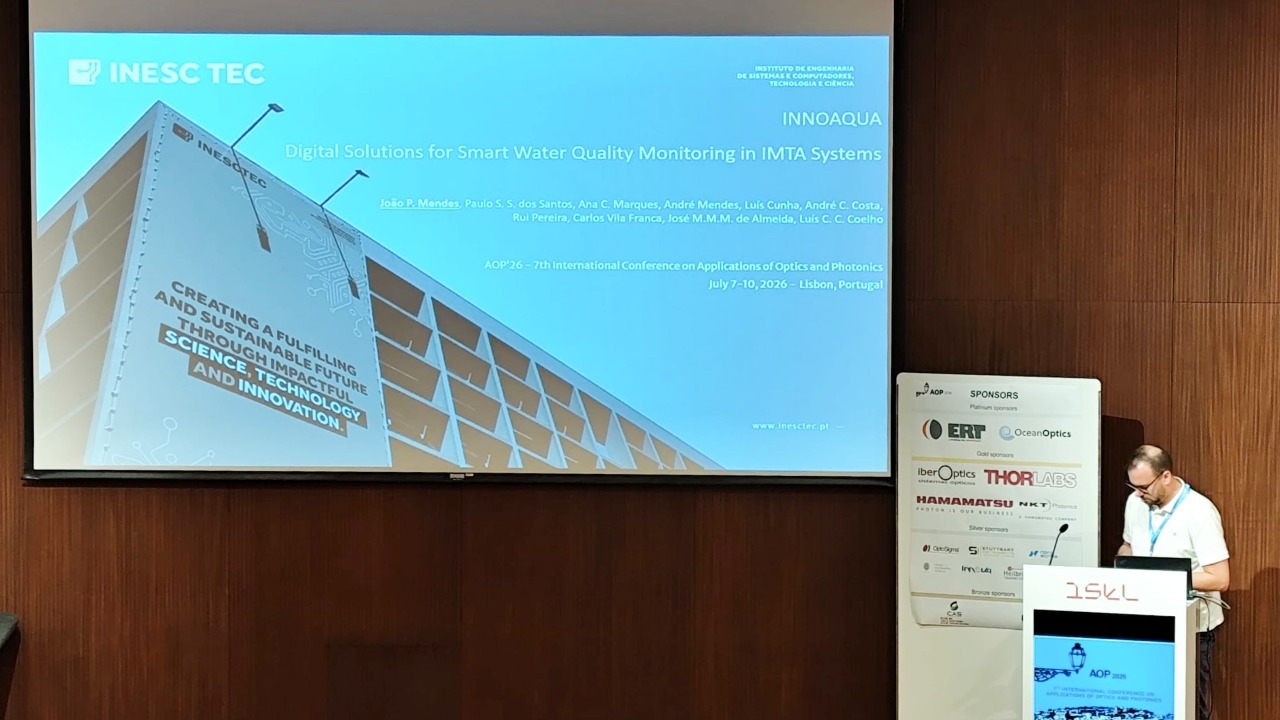
INNOAQUA was present at the 7th International Conference on Applications of Optics and Photonics (AOP2026), held in Lisbon, Portugal, from 7 to 10 July 2026. Organised by the Portuguese Society for Optics and Photonics (SPOF), the biennial conference brings together researchers, students, and industry experts to share advances in optics, photonics, and their real-world applications.
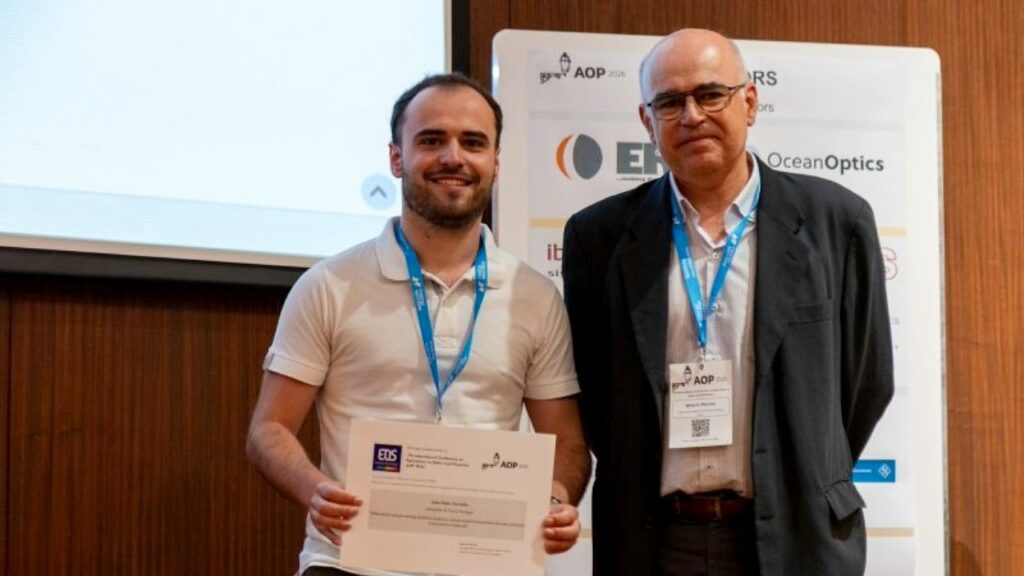
The project was represented by INNOAQUA partner INESC TEC, which showcased its work on intelligent water quality monitoring for sustainable aquaculture systems. The presentation not only highlighted an important technological contribution to the project but also received the Best Oral Presentation Award, recognising the quality and impact of the work.
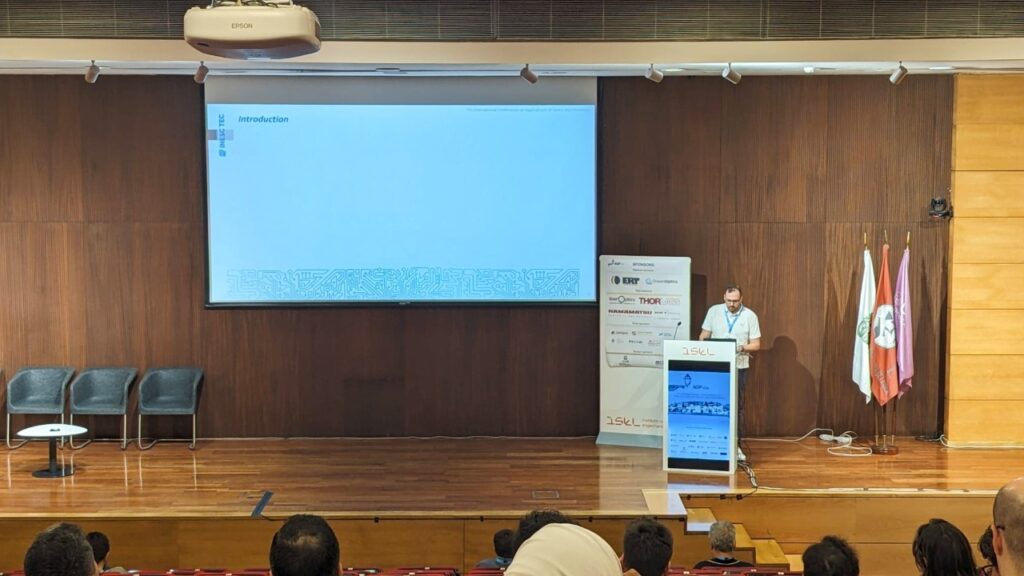
Presenting an Award-Winning Monitoring Solution
The award-winning presentation was delivered by João Mendes and focused on an intelligent water quality monitoring solution for Integrated Multi-Trophic Aquaculture (IMTA) systems, developed within the framework of INNOAQUA.
The work addressed one of the key challenges in sustainable aquaculture: ensuring efficient system management while making better use of available resources. In IMTA systems, nutrients from fish farming are reused to cultivate macroalgae, which help improve water quality before it is recirculated.
To support this approach, the INESC TEC team developed a monitoring platform capable of tracking key water quality parameters in real time. By combining continuous data collection with a digital dashboard, the solution provides operators with timely information to support decision-making and improve system performance.
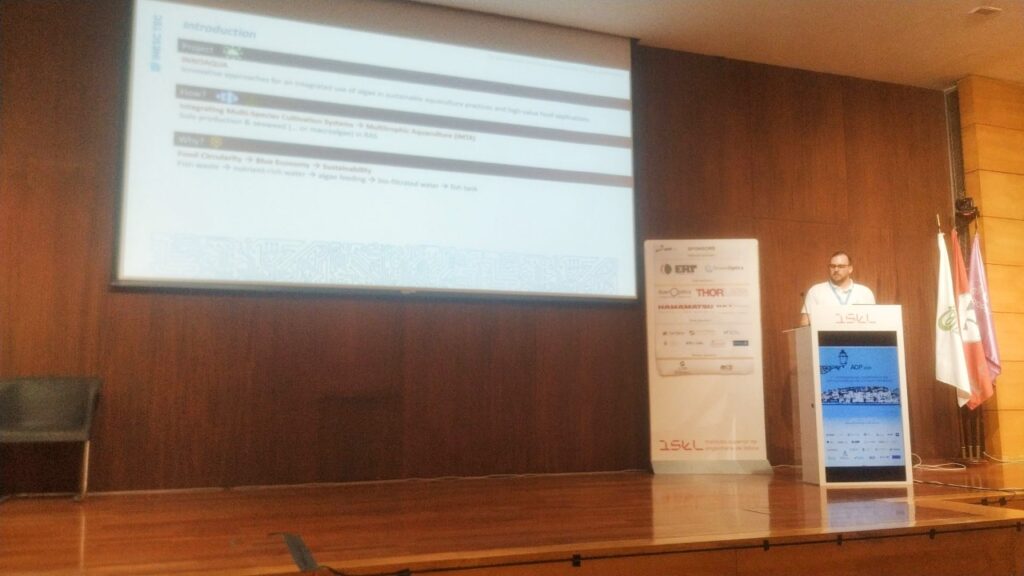
Supporting Smarter Aquaculture Systems
Reliable monitoring is essential for the successful operation of integrated aquaculture systems, where water quality directly influences productivity, resource efficiency, and environmental performance.
By combining real-time monitoring with digital decision-support tools, the solution presented at AOP2026 illustrates how technological innovation can help advance more sustainable aquaculture practices. The recognition received at the conference further highlights the potential of these approaches to support the development of smarter, more resilient aquaculture systems.
As INNOAQUA continues to develop integrated aquaculture models that combine fish production with macroalgae cultivation, solutions such as this play an important role in improving system performance and supporting the transition towards more sustainable and resource-efficient production systems.