News

Read the lastest news and insights from Innoaqua Project.

Aquaculture is booming across the Asia-Pacific region, and Singapore is once again at its centre. From 2 to 5 June 2026, the World Aquaculture Society returns to Singapore for its flagship annual conference, gathering producers, researchers, and technology providers from around the world under the theme “High Yield Production Through Nutrition, Health, Genetics and Resources.”
On 26 May 2026, the INNOAQUA project successfully hosted its Workshop on Seaweed and Fish Integrated Multi-Trophic Aquaculture (IMTA), bringing together a diverse group of stakeholders from across the aquaculture and blue biotechnology sectors. The online event was co-organised by project partners A4F – Algae for Future, SEA EIGHT, and INESC TEC, and aimed to foster discussion on innovative pathways towards more sustainable aquaculture systems in Europe.
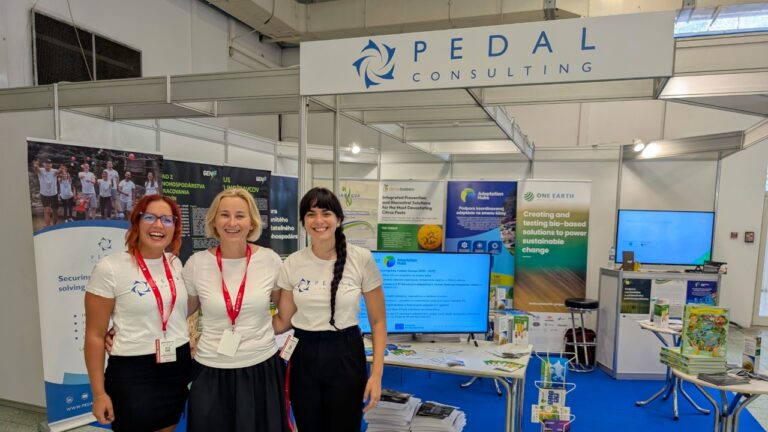
On 25 March 2025, INNOAQUA took part in the WE.Circular Popup Store held at the AC Hotel Bratislava (Slovakia), where the project was represented by the project partner PEDAL Consulting. The international event brought together around 70 participants from across Europe, including entrepreneurs, innovators, and professionals working in circular economy, sustainable business models, and womenled entrepreneurship.
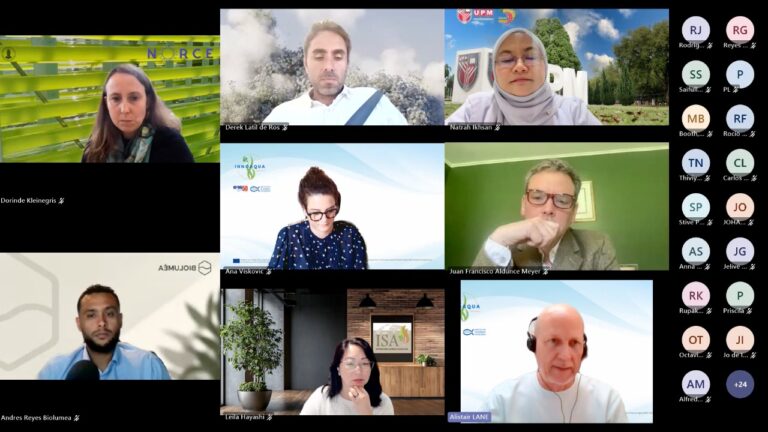
On 11 February 2026, the INNOAQUA Project, together with project partner the European Aquaculture Society (EAS) and leading international research institutions, hosted the online event “Algaebased innovation for nextlevel combined aquaculture production”. The session brought together more than 173 participants from Europe, Southeast Asia, and beyond, confirming the strong and growing interest in algaeintegrated aquaculture solutions.
On 29 January 2026, INNOAQUA project partner PEDAL took part in the ROSETTA International Networking Event, held at The Spot in Bratislava and streamed online via MS Teams. The hybrid event brought together more than 80 stakeholders from across the European food value chain, all united by a common objective: reducing food waste linked to food marketing standards and fostering more sustainable food systems.