INNOAQUA Project Presented at ISAP 2024 Conference

INNOAQUA - ISAP 2024

The INNOAQUA Project was recently presented at the prestigious ISAP 2024 Conference, held from June 24-28, 2024, in Porto, Portugal.

This conference is a significant event in the field of applied phycology, gathering experts, researchers, and practitioners from around the world to share the latest advancements and innovations.

Project coordinator NORCE had the opportunity to showcase the progress and scope of the INNOAQUA Project. The presentation highlighted our innovative approaches and sustainable solutions for advancing aquaculture and environmental sustainability. By participating in ISAP 2024, we aimed to foster collaboration, gain valuable insights, and contribute to the global dialogue on sustainable aquaculture practices.

We are proud of the positive reception and the engaging discussions that followed our presentation. It was an excellent platform to connect with fellow researchers and professionals, exchange ideas, and explore potential collaborations.

For more details about the ISAP 2024 Conference, visit their official website.

Share this article

Latest news

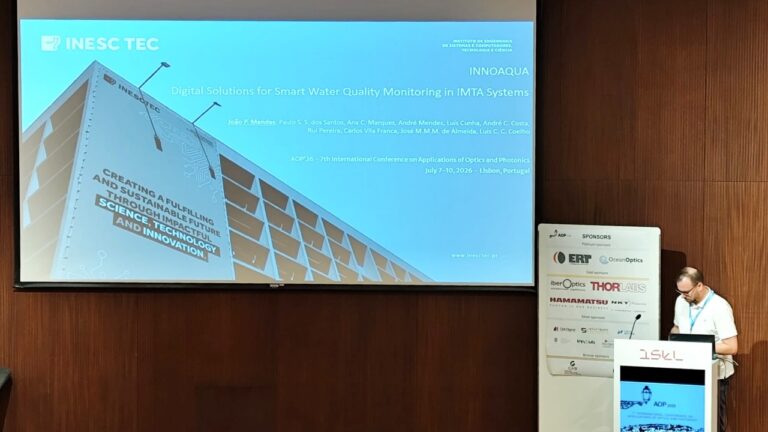
INNOAQUA was present at the 7th International Conference on Applications of Optics and Photonics (AOP2026), held in Lisbon, Portugal, from 7 to 10 July 2026. Organised by the Portuguese Society for Optics and Photonics (SPOF), the biennial conference brings together researchers, students, and industry experts to share advances in optics, photonics, and their real-world applications.
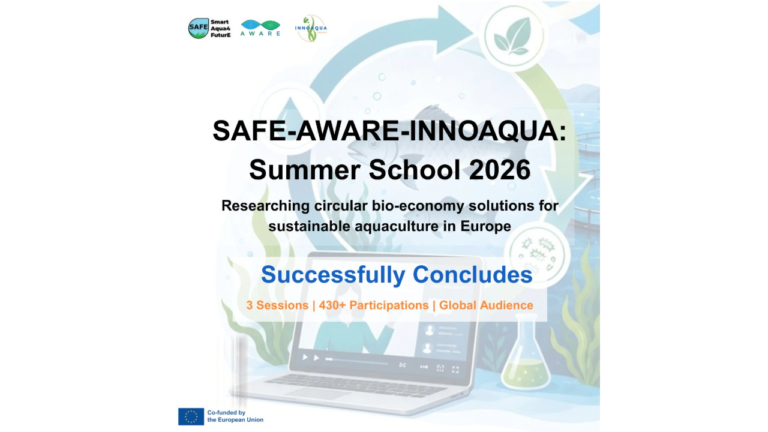
During June 2026, the SAFE–AWARE–INNOAQUA Summer School brought together researchers, students, industry representatives and innovation stakeholders to explore how circular bioeconomy approaches can help shape the future of sustainable aquaculture. Organised as a joint initiative between the three Horizon Europe projects SAFE, AWARE and INNOAQUA, the online programme created a space for collaboration and knowledge exchange, bringing together expertise from across research, industry and policy to explore pathways towards more resource-efficient aquaculture systems.