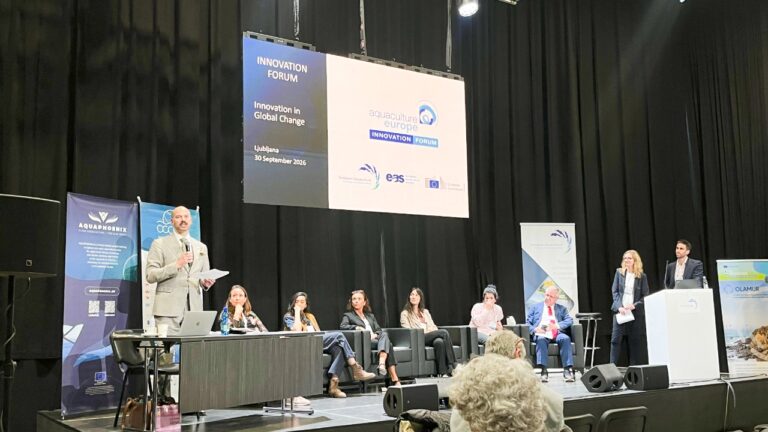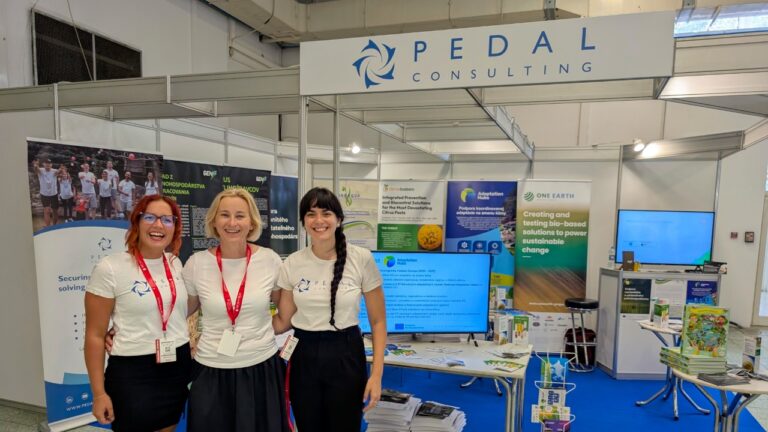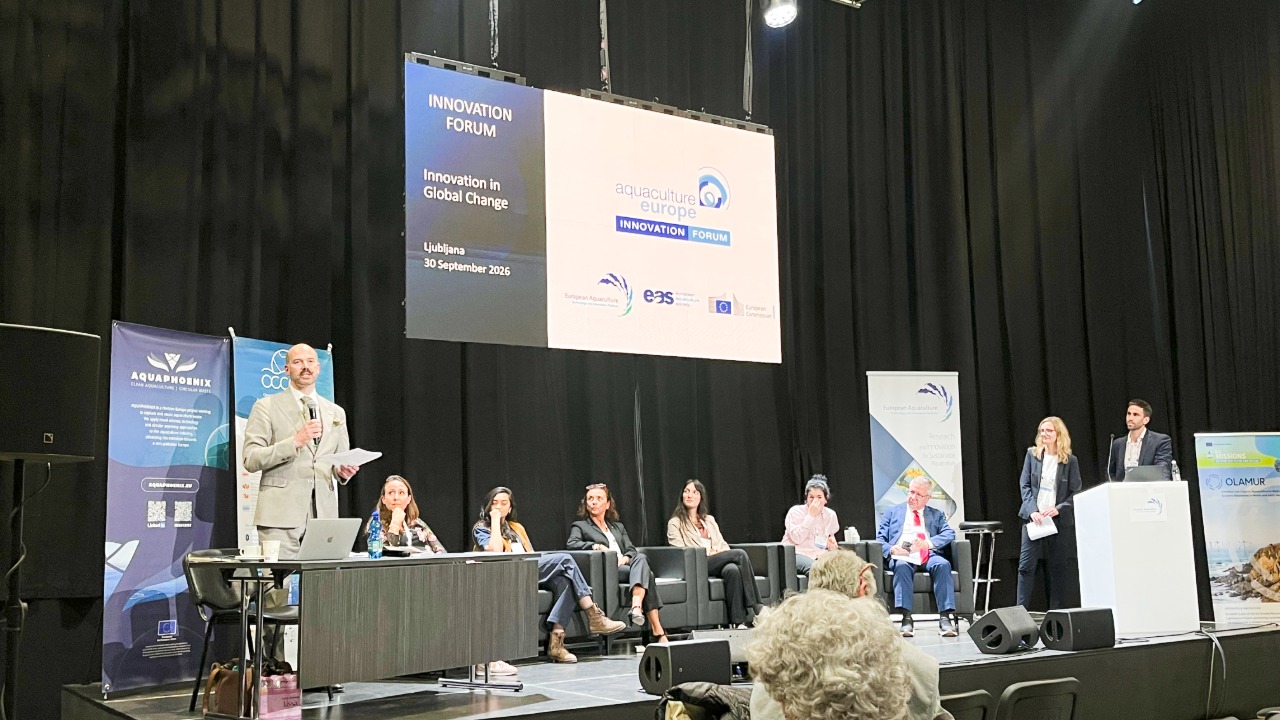
Aquaculture Europe 2026 (AE2026) brought the European aquaculture community to Ljubljana, Slovenia, from 28 September to 1 October under the theme “Aquaculture in Global Change”, organised by the European Aquaculture Society (EAS), an INNOAQUA partner, in its 50th anniversary year.
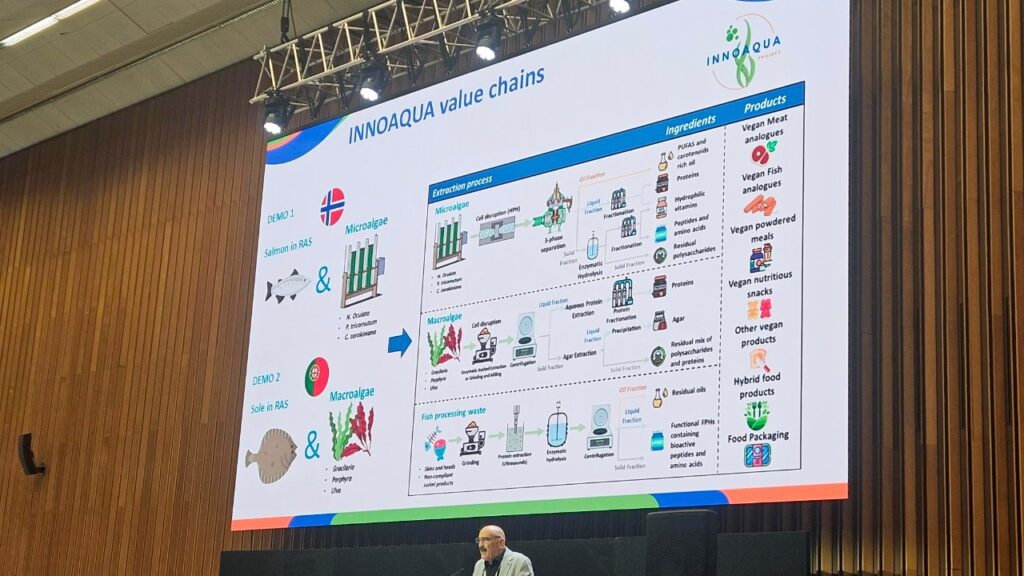
An Algae Session Close to INNOAQUA’s Work
Dorinde Kleinegris from NORCE, who coordinates INNOAQUA, chaired the algae session together with Rui Pereira from A4F – Algae for Future.
The session opened with discussions on Europe’s gap with Asia in algae production and the need to diversify species and develop products tailored to European markets. While speakers highlighted that European algae already compete with imported products on quality, the challenge now lies in making algae-based products more visible and accessible to consumers.
Speakers also showcased how sensors, control systems and early-warning technologies for biofouling can help optimise cultivation processes and reduce losses. Others presented examples of water and sludge from fish farming being used to cultivate microalgae and macroalgae, recovering nutrients while generating valuable biomass.
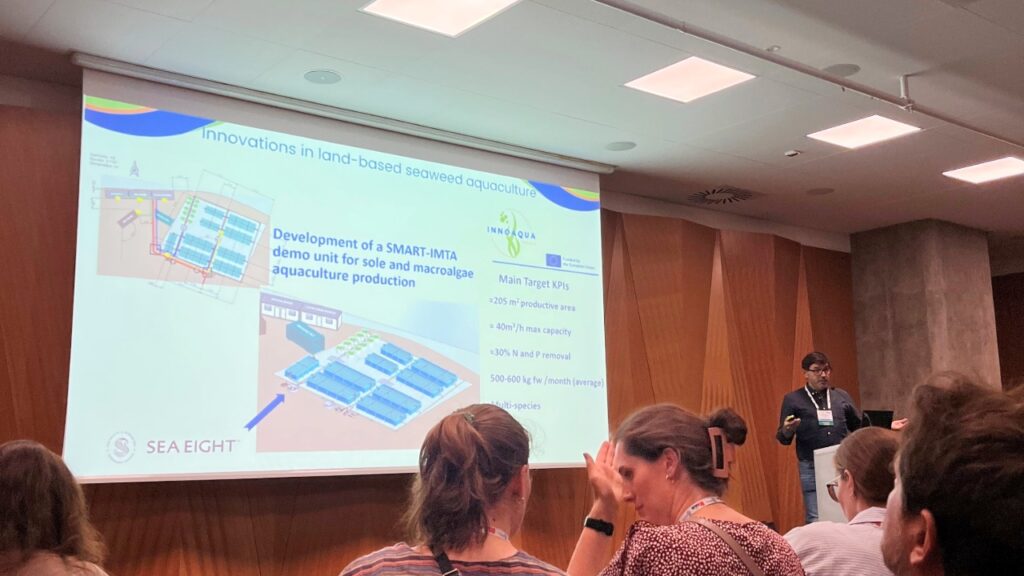
These examples echoed many of the approaches being explored within INNOAQUA, from algae-based food innovation to the integration of algae cultivation into circular aquaculture systems. This principle lies at the heart of the project’s pilot systems, which combine salmon and microalgae production in Norway and sole and seaweed cultivation in Portugal.
Assessing What Circular Systems Deliver
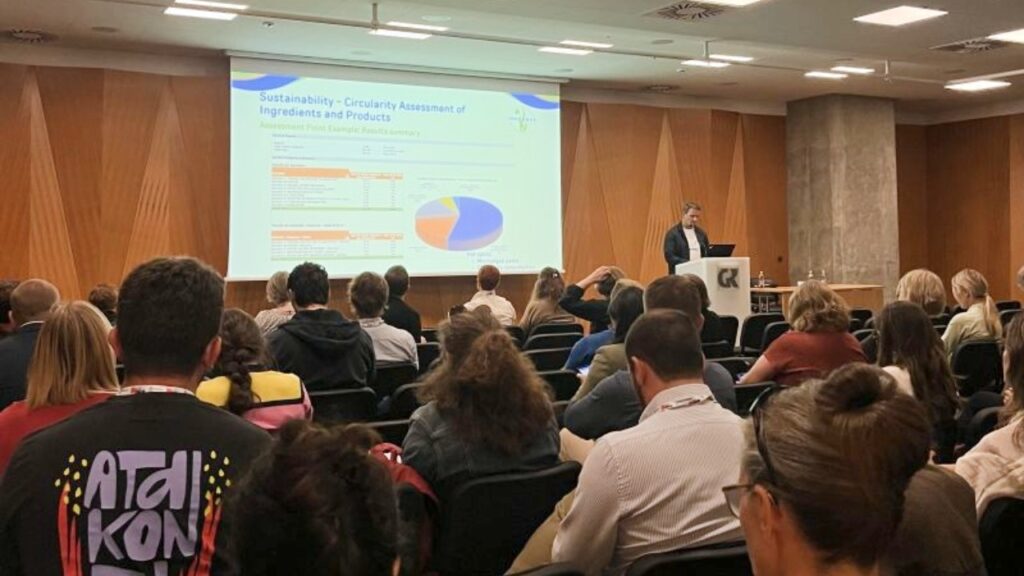
On 29 September, Carlos León Perfecto from Sustainn delivered the presentation, “Towards Integrated Life Cycle Sustainability and Circularity Assessment for Emerging Aquaculture Systems: Insights from INNOAQUA.”
The presentation explored how INNOAQUA evaluates emerging aquaculture systems at pilot scale, assessing environmental, economic and social performance alongside circularity indicators. By integrating these dimensions, the approach provides a more comprehensive understanding of the opportunities and trade-offs associated with innovative aquaculture systems.
INNOAQUA also featured in the opening plenary session, “Aquaculture – from Sustainability to Resilience”, where Jurica Jug-Dujaković from MJD Advisory and Development highlighted the project as an example of circular production approaches being developed within European aquaculture.
Looking Beyond AE2026
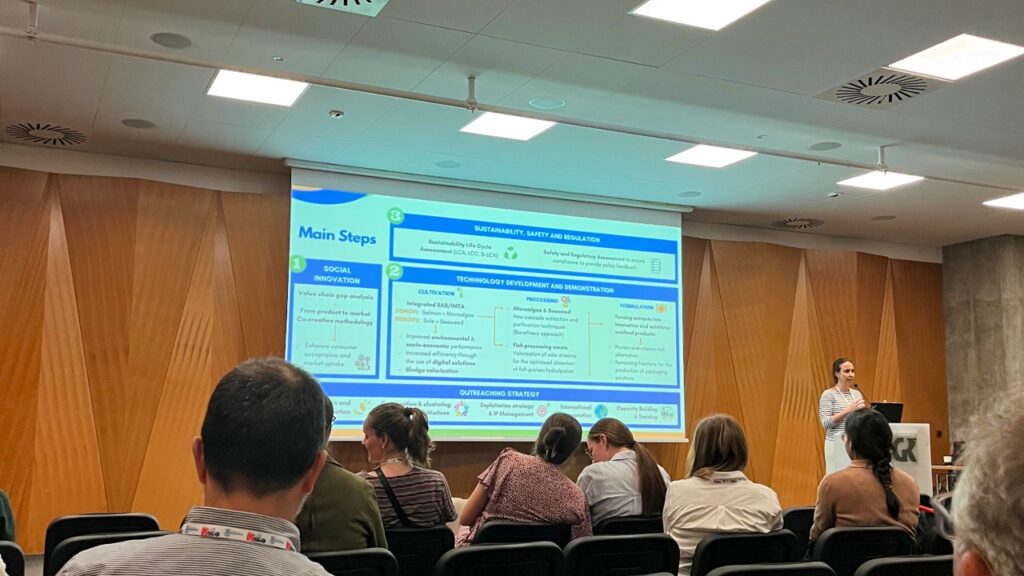
The week in Ljubljana showed that many of the questions driving INNOAQUA, from developing algae-based products to recovering nutrients from aquaculture systems, are shared across the European algae and aquaculture sectors.
Across the conference, algae featured not as a niche topic but as an important part of conversations on the future of sustainable aquaculture in Europe.